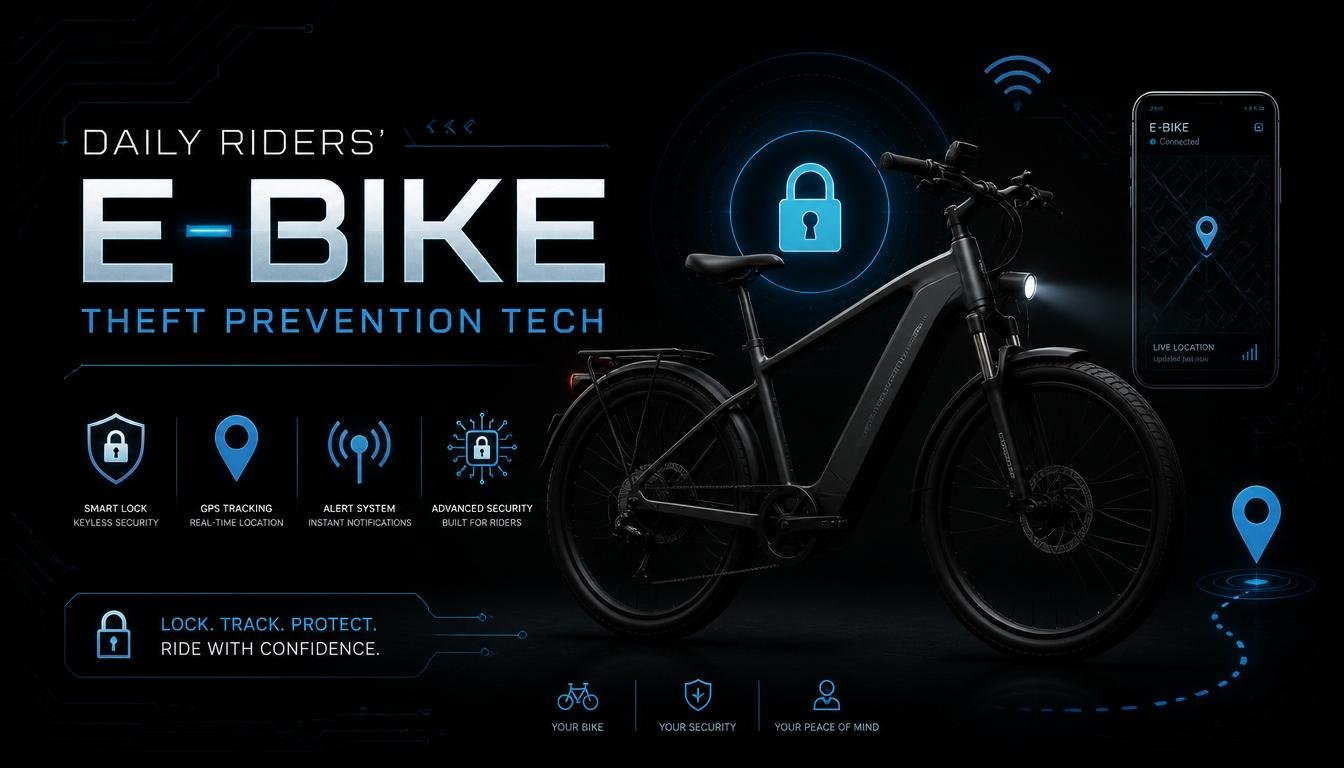
I used to think that buying a heavy, fifty-dollar cable lock made my e-bike completely invisible to thieves. I was so confident that I left my shiny new electric ride outside a coffee shop for exactly four minutes while I grabbed an iced latte. When I walked out, my bike was gone, my latte felt suddenly very heavy, and all that was left on the concrete was a sad, clean-cut piece of plastic wire. It turns out that a modern e-bike is basically a giant dollar sign on wheels for thieves.
Ever since that heartbreaking morning, I have made it my personal mission to turn my replacement e-bike into a rolling digital fortress. Standard bicycle locks just do not cut it anymore for daily commuters. If you ride an electric bike to work or school every day, you need to upgrade your defense system with the latest micro-mobility tech. Here is my personal guide to the best anti-theft technology that actually keeps your ride safe.
Why Standard Bike Locks Flunk the Test:
Before we dive into the high-tech gadgets, we have to look at how tool technology has changed. In the old days, a thief had to use giant bolt cutters to snap a lock, which looked very suspicious in public. Today, the modern criminal carries a portable, battery-powered angle grinder hidden inside a regular backpack.
These small power tools can cut through a standard steel U-lock or heavy chain in less than thirty seconds. They spark, they make a ton of noise, but they work so fast that most bystanders do not even have time to react.
If you are relying solely on a basic metal lock from a traditional sporting goods store, you are playing a losing game. To protect an expensive piece of micro-mobility tech, you have to fight back with specialized materials and digital systems.
Heavy Armor: Angle-Grinder Resistant Mechanical Locks:
My first line of defense is a new category of mechanical locks engineered specifically to defeat power tools. Brands like Litelok and Hiplok have developed heavy-duty U-locks that use advanced materials like ceramic composites.
When a thief tries to push a spinning angle grinder disc into these locks, the composite material actually wears down the cutting wheel itself. The tool ends up dull and broken before it can even slice halfway through the shackle.
| Lock Type | Time to Cut with Power Tools | Best Used For |
| Standard Cable Lock | 2 to 5 seconds | Quick daytime stops in low-risk areas |
| Traditional Steel U-Lock | 20 to 45 seconds | Secondary wheel security |
| Ceramic Composite U-Lock | Over 5 minutes (Destroys tool discs) | Primary frame security in high-density areas |
These specialized locks are definitely heavier and cost more than regular options, but they are worth every single penny. A thief looking for a quick flip will see one of these monsters, realize they will need three separate replacement cutting discs to get through it, and walk away to find an easier target.
Digital Lockdown: Smart Motor Disablement:
Physical locks stop the wheels from moving, but smart e-bike systems stop the bike’s entire electrical brain from working. This is where modern commuter tech gets really exciting.
Many premium e-bike manufacturers now include automatic motor locks that connect directly to your smartphone. For example, the latest updates in the Bosch eBike Flow app utilize a digital lock feature. When you walk away from your bike, the system uses Bluetooth to recognize that your phone is gone. It instantly shuts down the motor drive system.
How it works: Even if a thief cuts your physical lock and tries to pedal away, the bike acts like a heavy, clunky acoustic bicycle with zero motor assistance.
Furthermore, new system architectures use digital component signing. This means the motor, the battery pack, and the digital display screen are all digitally linked to your personal user profile in a central cloud database. If your bike gets stolen, you can mark it as stolen in your app. If someone tries to plug your stolen battery into a different bike, or if a mechanic plugs the bike into a diagnostic tool for a service check, a giant red warning pops up. This makes the parts completely unsellable on the secondhand market.
Stealth GPS and Cellular Trackers:
If a highly determined thief manages to lift your bike into the back of a pickup truck, your physical locks cannot save you. That is when you need to switch from prevention mode to recovery mode. You need a hidden tracker that tells you exactly where your bike is traveling in real time.
I do not recommend relying solely on simple Bluetooth finders like standard Apple AirTags for high-value e-bikes. While they are cheap and easy to hide, they depend entirely on other people with smartphones walking past your bike. If your bike is hidden in an abandoned warehouse or a quiet alley, a Bluetooth tracker will lose its signal.
Instead, I use a dedicated GPS tracker that connects to a cellular network. There are two brilliant ways to integrate these into your commuter setup:
Handlebar Trackers:
Devices like the BikeFinder use a clever expansion mechanism that slides deep inside your handlebar tubes. Once you tighten it with a special tool, it is completely stuck inside the metal frame. A thief cannot see it, and they cannot pull it out without destroying the bike handle.
Motor-Integrated Trackers:
Systems like the PowUnity BikeTrax plug directly into the internal wiring of your e-bike motor casing. This is the ultimate stealth setup. It draws power straight from your main e-bike battery while you ride, so you never have to worry about charging it. It also has a small backup battery that keeps broadcasting its GPS coordinates for weeks, even if the thief detaches the main e-bike battery pack.
Motion-Activated Alarms and Geofencing:
The best way to stop a theft is to interrupt the thief the exact second they touch your property. This is why I love motion-sensor alarms and virtual geofences.
Modern micro-mobility apps allow you to set up a digital boundary around your parked bike, which is called a geofence. If your bike moves more than ten meters away from the spot where you locked it, your smartphone will immediately vibrate and flash an emergency alert.
Pairing a geofence with a loud, physical audio alarm creates a massive psychological deterrent. Devices like the Knog Scout can be bolted directly underneath your water bottle cage using tamper-proof security screws. If someone shakes your bike or tries to pick at your lock, a one-hundred-and-thirteen decibel siren starts screaming. It draws immediate eyes from every single person on the street, which is a thief’s worst nightmare.
Component Security: Protecting the Expensive Bits:
A common mistake daily riders make is only locking the main frame of the bike. I have seen countless commuters walk back to their locked bike frame only to find that their front wheel, their premium saddle, and their five-hundred-dollar lithium-ion battery pack have all been stripped away.
E-bike batteries are incredibly high-value targets because they are easy to remove and easy to sell online. Always make sure your battery has a robust mechanical key cylinder lock built into the frame. When I park my bike in high-risk areas for extended periods, I do not risk it at all: I simply unlock the battery, slide it into my backpack, and bring it inside with me.
For your wheels and seat post, you should replace the standard quick-release skewers with coded security bolts. Brands like Hexlox make tiny magnetic inserts that plug directly into the hex bolts of your bike parts. These inserts can only be removed using a matching, magnetically coded key that sits on your personal keychain. This completely prevents a thief with a standard Allen wrench from stripping your components in the dark.
Conclusion:
Securing a daily commuter e-bike requires a multi-layered strategy that mixes mechanical strength with digital intelligence. You cannot rely on a single cheap lock to protect a valuable piece of high-tech transportation. By investing in an angle-grinder-resistant U-lock, utilizing smart motor-lock apps, hiding a cellular GPS tracker inside your frame, and securing your individual components, you create a system that is simply too difficult and risky for criminals to target. Stay vigilant, lock your ride smart every single day, and embrace the power of modern micro-mobility security tech to keep your commute stress-free.
FAQs:
1. Can a thief reset a smart e-bike motor lock by removing the battery?
No, the digital lock is embedded into the central motor controller firmware and stays locked even without a battery connected.
2. Do GPS e-bike trackers require a monthly subscription fee to work?
Yes, most true GPS cellular trackers require a small monthly fee to cover the data cost of sending location updates over cell towers.
3. What is the loudest type of motion alarm available for commuter bikes?
Most premium bike alarms output between one hundred and ten and one hundred and twenty decibels, which is as loud as a live rock concert.
4. Can I track my e-bike if it is taken inside a concrete parking garage?
Cellular GPS trackers can sometimes lose direct satellite signals indoors, but advanced models can still estimate the location using nearby cell towers.
5. How do magnetic security bolts protect my bike saddle from being stolen?
They block standard hex wrenches from inserting into the bolt, meaning only your uniquely coded key tool can loosen and remove the seat.
6. Is it safe to leave an e-bike parked outside overnight if it has a great lock?
No, leaving an e-bike outside overnight gives thieves unlimited time and privacy to use heavy power tools, so you should always store it indoors.